Category Archives: Education

Actions speak louder than words

I am sure we all agree that we value human life, we defend human life, for some even before this, life is fully formed, and yet: we destroy lives in all armed conflicts and continue doing so at an alarming pace. We tend to say “It is for the good of all”, or “It  is for the better.” We also say: “We need to fight the ENEMY to protect our values”, “We need to punish the “bad guys”, the evil, the other side, etc.” The list of reasons given is long. We also make a difference concerning the lives that are lost. Not every human life seems to deserve to receive the same respect. The value of human life has become  relative. Taking just one example (as you know, there are many): When studying the available sources concerning the casualties in the long-standing conflict in the middle east between Israel and the Palestinians, the ratio of people killed over the decades seems to be 5 to 100. For 5 Israeli killed, 100 Palestinians are killed. In the recent atrocious 2 years the difference  seems to be even  greater: 1 to 100. Who can call this a necessary, proportional response to the atrocities of  “the evil enemy”. Apparently, only in the last few days we can start to hear heads of state and governments of the west cautiously  reacting to the sheer abomination of what is going on.

And it could be so simple: Stop supporting those who act in an unacceptable way. Stop offering them financial, ideological and moral support. So simple, yet, the money continues flowing, the calls for peace are weak, and the fear to be labelled antisemitic looms large. It is is time to realise that this cannot continue any further.  No, do not even try to put the label antisemitic on this. It is not antisemitic to strongly criticise the Israeli powers that be, those who decide, those who send others out to kill, and those who let this happen. The attempt to silence critics and to protect one’s unjust and cruel decisions and actions has been overused. And too many people have fallen into that trap. I am not going into the details of what the different sides of this ongoing struggle have done or have not done: the list of wrong-doings is too long, the risk of leaving something out is too huge. 

One thing, the only reasonable and morally acceptable reaction, that the powers not involved directly in the conflicts can and should have in any violent conflict, is the the following: they can force the warring parties to stop the destruction and the killing, to sit down at the table to negotiate a non-violent solution that can be accepted by both sides. Offering continued material, financial, ideological and moral support for one or the other or for both sides just continues the destruction. But to stop the support until the parties are ready to sit down and seriously negotiate can save lives and end wars. This is what real sanctions could look like and should be used for. Only for this. Not an endless number of sanctions packages against on side of the conflict. The negotiations that follow should be taking place in the framework of an impartial, only accountable to facts, the truth and to justice. We do have institutions that are supposed to play this role, however they would need to revive their impartiality.

This approach would work wonders in most of the ongoing conflicts on this planet. Why do we not see it happening? Well, “Cui bono” is the eternal question and it will deliver valid  answers. As long as the support for the conflicting parties pays off in direct financial, geopolitical and/or ideological gains the powers that be are inclined to follow that route. 

What they say publicly sounds different, of course. There they talk of justice, of blame, talk of more or less democracy, talk of defending the free world, of duty to support the “good guys”…  And who the “good guys” are usually depends on which side you place yourself.

War is never the solution. Many before us have seen that, have said and have received The Nobel Peace Prize for it in the case of Bertha von Suttner. Never. The moral and ethical reasons for that are obvious. I will not  further elaborate on those here. But I want you to consider this: every injustice imposed on people, every killing and every destruction of livelihood generates the wish for justice and also for revenge when justice cannot be found. So unless you, the “good guys”, are prepared to kill and exterminate all the “bad guys”, and unless you want to prepare the grounds for endless, eternal retaliation, you will have to stop making war.

NB: You might attempt to kill every enemy – terrorist as they are often called – in sight, and accept the civilian casualties in the thousands in the process. Know that history has shown that final solutions do not work to bring peace and prosperity. It has never worked and it will never work. It just kills a lot of people and destroys a lot of what civilisation has built over centuries, even millennia. 

That is too high a price, I would say. Well, I hope.
Decency – Anständigkeit

Deutsche Version weiter unten

Be decent

I call upon all decent people… to raise their voices and say stop to the growing belligerent madness. I know the term “decency” can mean many things which sometimes even contradict each other. Some meanings may be controversial, but for want of a better word I want return to this one after all sorts of detours using terms that have shown themselves to act more like chameleons, changing their meaning or even losing it all together.

Progressive or conservative, left or right, modern or old-fashioned, all seem to have lost their constructive meaning and are applied to anything and its contrary.  Even the label democratic is being used for undemocratic regulations and regimes. 

Define decency

Of course we need to define what we mean by decent. As a starter I venture the following reflections to help us define the decency we want to see in the world. 

Three sieves 

The three sieves of Socrates. Before you tell a story, before you believe anything, ask yourself  the following: Is it true what you think you know?  Is it kind to tell it? Is there any necessity to tell or believe it? If the answer to one of the three is “No”, then do not tell the story and suspend judgement until you know more.

  1. Truth
  2. Kindness
  3. Necessity

Five ethical principles 

There are numerous ethical codes and guidelines. Some are very complex and not easy to fully understand. I found that these five are down to earth and easy to comprehend. This increases the chances that they be actually applied by people in their everyday lives.  

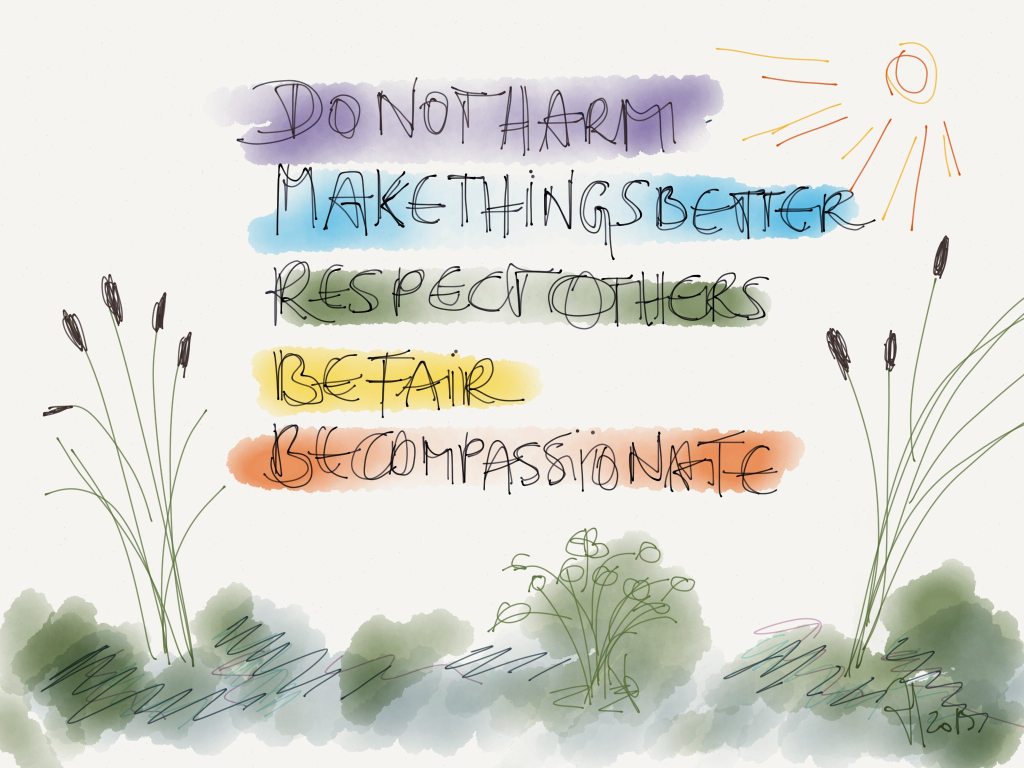
Whatever you attempt and plan to do keep the following in mind

  1. Do not harm
  2. Make things better
  3. Respect others
  4. Be fair
  5. Be compassionate

Six pillars 

The International Forum for the Future of Education (forum4education.com) has identified 6 pillars on which to base any educational undertaking. They can also serve as guidelines for a decent way of acting in life.

  1. Apply your critical thinking ability
  2. Accept individual responsibility and accountability for your actions
  3. Communicate constructively
  4. Live together in one common identity: human beings 
  5. Opt for sustainable production in a sustainable environment
  6. Focus on learning not teaching

Decency, the way I see it, is informed by the above. I’d be interested to read your thoughts. Looking forward to your comments.

Deutsche Version

Sei anständig!

Ich rufe alle anständigen Menschen dazu auf, ihre Stimme zu erheben um dem wachsenden kriegerischen Wahnsinn ein Ende zu setzen. Ich weiß, der Begriff „Anstand bzw. Anständigkeit“ kann vieles bedeuten, manchmal sogar Widersprüchliches. Manche Bedeutungen mögen umstritten sein, aber mangels eines besseren Wortes möchte ich nach all den Umwegen und der Verwendung von Begriffen, die sich als Chamäleons erwiesen haben, ihre Bedeutung veränderten oder sogar ganz verloren, zu diesem zurückkehren.

Progressiv oder konservativ, links oder rechts, modern oder altmodisch – alle scheinen ihre konstruktive Bedeutung verloren zu haben und werden auf alles und dessen Gegenteil angewendet. Selbst das Etikett „demokratisch“ wird für undemokratische Regelungen und Regime verwendet.

Definition von Anstand

Natürlich müssen wir definieren, was wir unter Anstand verstehen. Als Einstieg möchte ich die folgenden Überlegungen anstellen, die uns helfen sollen, DEN Anstand zu definieren, DEN wir in der Welt sehen wollen.

Drei Siebe

Die drei Siebe des Sokrates. Bevor du eine Geschichte erzählst, bevor du etwas glaubst, frage dich: Ist das wahr, was du zu wissen glaubst? Ist es nett, davon zu erzählen? Besteht eine Notwendigkeit, es zu erzählen oder zu glauben? Wenn die Antwort auf eine der drei Fragen „Nein“ lautet, dann erzählen Sie die Geschichte nicht und urteilen Sie nicht, bis Sie mehr wissen.

  1. Wahrheit
  2. Freundlichkeit
  3. Notwendigkeit

Fünf ethische Prinzipien

Es gibt zahlreiche ethische Kodizes und Richtlinien. Manche sind sehr komplex und schwer zu verstehen. Ich habe festgestellt, dass die nachfolgenden fünf klar und leicht verständlich sind. Das erhöht die Wahrscheinlichkeit, dass sie von Menschen im Alltag tatsächlich angewendet werden.

Was auch immer Sie versuchen und planen, denken Sie an Folgendes:

  1. Richten Sie keinen Schaden an
  2. Verbessern Sie die Dinge
  3. Respektieren Sie andere
  4. Seien Sie fair
  5. Seien Sie mitfühlend

Sechs Säulen

Das Internationale Forum für die Zukunft der Bildung (forum4education.com ) hat sechs Säulen identifiziert, auf denen jedes Bildungsvorhaben ruhen sollte. Sie können auch als Leitfaden für ein anständiges Handeln im Leben dienen.

  1. Setzen Sie Ihr kritisches Denkvermögen ein.
  2. Übernehmen Sie individuelle Verantwortung und geben Sie Rechenschaft für Ihr Handeln.
  3. Kommunizieren Sie konstruktiv.
  4. Leben Sie als Menschen in einer gemeinsamen Identität zusammen
  5. Entscheiden Sie sich für nachhaltige Produktion in einer nachhaltigen Umwelt.
  6. Konzentrieren Sie sich auf Lernen, nicht auf Lehren.

Anstand, wie ich ihn verstehe, basiert auf dem oben Gesagten. Ich bin gespannt auf Ihre Gedanken und freue mich auf Ihre Kommentare.

Is war war or is war a promise of peace?

Europe is already spending more money on arms and military (about 300 billion)* than Russia (about 110 billion)* and still we hear of the Russian threat to the European Union. We hear about Russia going to conquer Europe all the way to Portugal and kill everybody and do other abominable things to those who is doesn’t kill. And we hear about one village to the east which resists and fights for the freedom of us all.*

There are those who hail the freedom fighters to the east and support their struggle which maims and ends the lives of many, young, men, destroys endless swaths of vital infrastructure and thus lays the foundation for generations of resentment. A fact we tend to forget.

Those voices come from comfortable armchairs in places where the destruction and killing is only present through the media, and where, after having written another comment of encouragement to the fighters in the east, they leave the quiet house and garden, get into their quiet electrical car with a good climatic conscience and a “I stand with ….” on their minds and social media profiles, and drive off into the sunset for a margarita on the rocks or on the beach.

Out of whose scrap book did this vision escape and become reality? The ghosts of our great grandfathers and mothers? The trigger happy writers of crime and punishment books? The composers of tragedies? The self-righteous cliques of all colours? The producers and vendors of arms? I do not know, although the latter group is quite a promising candidate to invent and support scenarios which promote their sales.

Paired with a total absence of historical knowledge and understanding, of rational, logical and critical thought, it leads to an overwhelming number of war-mongering statements of European political leaders, lesser leaders and followers, void of sense and just good to stoke the fire.

“800 billion euros more over the next 4 years for a rearmament plan of Europe” (Van der Leyen, 5 March 2025)*

There used to be a peace movement, strong before the two world wars of the 20th century with Bertha von Sutter receiving the peace Nobel Prize in 1905; and strong again after the wars, in the 60s and 70s. Somehow something was lost on the way, how else can you explain that parts of the former peace movement are passionately speaking out for the war efforts to continue.

We can note a certain tendency to forget the fundamental fact: actions have consequences, and what happens at a given moment always has roots in the time and in the actions of various players leading up to the present moment. Acts happened and they had consequences and lead to other acts, which again have consequences. 

No, history did not start on 24 February 2022. If you want to understand what is going on you need to look at the actions and their consequences in the years or decades leading up to  that moment. No, history did not start on 7 October 2023. Before judging one or the other conflict party you must analyse what happened before, the actions and their consequences.

When I look at the publicised opinion, in the media, statements of politicians, of opinion leaders of all sorts I always hear the unsaid implication that before these two dates everything was just fine, hunky-dory, great, fantastic … and then some bad villains started the violence and now innocent us, we have to defend ourselves. 

If you challenge their narrative by asking questions, by pointing out that there were things that happened before and that these might perhaps have to be taken into account before passing judgement, you are quickly relegated to the camp of conspiracy theorist and populists. 

Of course I am not saying that this could serve as an excuse for anyone who committed  unlawful acts, took part in carrying out atrocities and ignored international and national law. However, it has to be applied to all the involved parties, not just to one side. No-one has the right to ignore the law, no-one is justified to kill and destroy. As I said in earlier posts, there is not just war, there has never been a just war. Attempts to solve problems through the use of ultimate violence is not a solution. It is not ethical and it is not sustainable; it is just the breeding ground for future violence and future wars. 

Certainly there is the right to self-defence. Especially on a personal individual level. But on a country level? How far can we extend this right when we know the cost at present and the cost we and the coming generations will have to pay in the future. 

1 https://eda.europa.eu/news-and-events/news/2024/12/04/eu-defence-spending-hits-new-records-in-2023-2024

2 https://www.statista.com/statistics/262742/countries-with-the-highest-military-spending/

3 I apologise to Asterix and Obelix for this misplaced analogy

4 https://www.euronews.com/tag/ursula-von-der-leyen

It is time to seriously consider doing something

… about the state the world is in. 

Politicians try to buy and sell parts of the world (they usually do not even own).

Entrepreneurs try to make more and more money and see earning opportunities in everything, be it pandemics, be it wars, be it destruction or prescribed well-being. 

People try to follow fashions of beliefs and convictions hoping they will make them happier, better people, more successful, more likeable or at least desired.

Normal feelings and experiences of living in a world and in nature and with people become pathologised and treated as illnesses. 

There seems to be a pandemic of mental  non-wellbeing, and if you are not at least on some spectrum or other your chances in life are getting smaller and smaller. 

Our social belongings become more important than what is inside us, the me, the individual and his or her rights and responsibilities.

The selection of what is newsworthy has nothing to do with an educational role of the news, of getting informed, of learning to understand how the world is going and how to make it a better place. News become arbitrary. News becomes entertainment, not the quality of the content counts but whether it captures the attention of the audience.

A viral spiral of escalation.

With this in mind I will continue writing, I will always keep an educators perspective, however what I write here  will go beyond pure educational concerns. It is time to raise our voice, we, who are just trying to be decent, rational beings and trying to make the world a better place for all. 

We have been silent long enough or saying “oh well, it is not important enough”, “oh it is just a few”, “why are you so worried about it. It is just a detail, not important”, “well the majority of people will not swallow these lies and misrepresentations and will stop them”…

Unfortunately this hasn’t happened. On the contrary we

  • have more and more wars, and governments and media speak a belligerent language 
  • care about climate but don’t see that the war we support destroys every gain we could make
  • say we care about life and still send people to death, … for what?
  • do not look beyond the bubble we find ourselves in
  • believe pseudo scientific narratives f.ex. that the human species is NOT binary
  • do not understand that past injustices cannot be remedied by present injustices;  this just feeds a circle of escalation of injustice
  • accept the news as news while knowing too well that a lot of it is fake and manipulated
  • do not educate seriously for critical thinking and we avoid critical thinking and discussion arguments
  • do not understand that the only identity that matters for us ALL is that we are all are human beings

I will stop for now. I am sure you get the gist.

Stay tuned, read, comment, agree or disagree, argue with me,  … Let’s communicate in order to understand oneself, the other, and the world better. That is what communication is about.

Stop labelling

Beware of labels

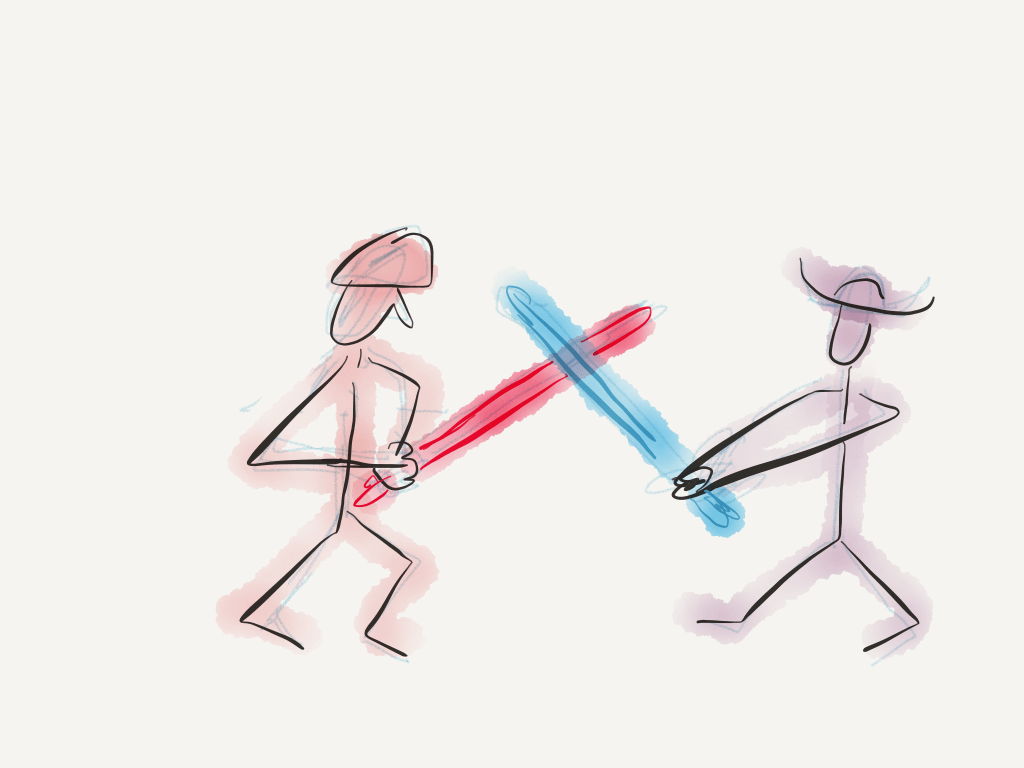
I am sick of people throwing labels at each others’ heads instead of communicating.

When will you be ready to talk about what people actually do instead of assigning labels to them and then either loathe these labels or praise them.

Labels go together with concepts and categories and while we need them sometimes we DO NOT need them when agreeing or disagreeing with someone. On the contrary, using them in these situations will not help understanding neither will it help changing things for the better.

Don’t praise or loathe labels like: woke, left, right, conservative, gender, trans or term, hetero or normative or gay, liberal, extremist, terrorist, sexist, racist, misogynist, black, white, PoC, BAME, colonialist, old white men? …. I could fill pages with such labels….

Rather look at and comment on what people actually do. If you need to criticise then criticise what they do and explain why what they do is good or bad in your eyes.

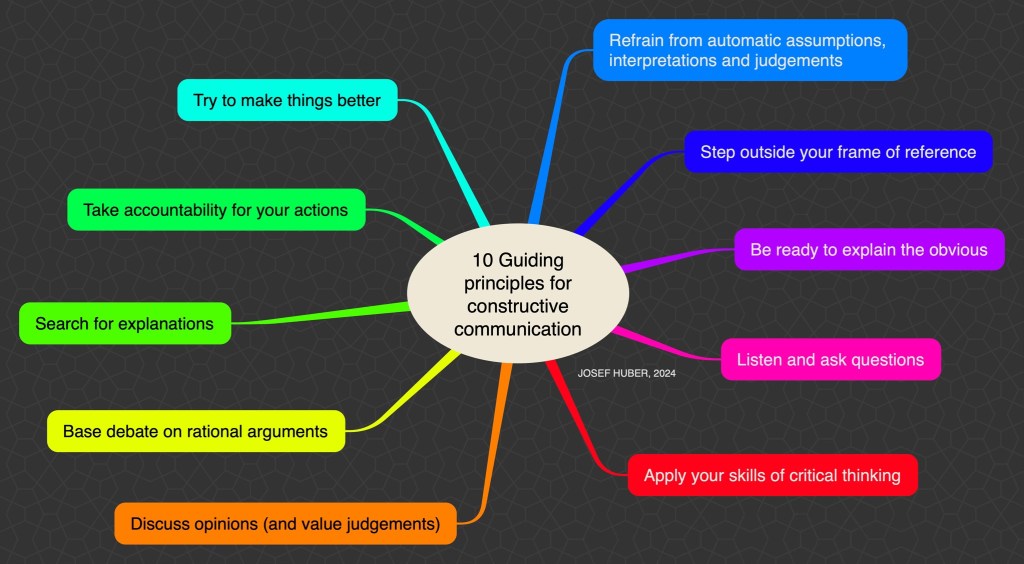
Talk and communicate and follow these guidelines 

Krieg ist ein schmutziges Geschäft

Das deutsche Umweltbundesamt berichtet auf seiner Webseite das die Emissionen der EU zwische 1990 und 2022 um fast 1500 Milllionen Tonnen CO2e zurückgegangen sind: “Zwischen 1990 und 2022 sanken die Emissionen der EU-27 um 1.492 Mio. t in CO₂-Äquivalenten (-31 %)” (https://www.umweltbundesamt.de/daten/klima/treibhausgas-emissionen-in-der-europaeischen-union#trends )

Das sind ca 45 Millionen Tonnen weniger pro Jahr.

Das ZDF berichtet auf ihrer Webseite dass der Krieg in der Ukraine im ersten Jahr die Atmospähre mit 120 Millionen Extratonnen CO2e belastet hat: “Demnach hat der Ukraine-Krieg allein im ersten Jahr 120 Millionen Tonnen CO2-Emissionen-Äquivalente ausgestoßen.” (https://www.zdf.de/nachrichten/panorama/klima-fussabdruck-ukraine-krieg-russland-100.html)

Also kurz gesagt, das was alle EU Länder in 3 Jahren an Emissionen eingespart haben ist nach 1 Jahr Krieg wieder in der Luft.

Wir haben jetzt schon ca 3 Jahre Krieg in der Ukraine. Das wären ca 9 Jahre Einsparungen wieder “aufgeholt”.

Wenn wir nun andere kriegerische Auseinandersetzungen dazuzählen dann sind wird dabei uns in Windeseile wieder zurück in die 90er Jahre des letzten Jahrhunderts zu verschmutzen.

Die einzige Forderung die derzeit Sinn hat ist “Stoppt Krieg – verhandelt!” Alles andere hat nur Sinn wenn wir uns nicht in ein dunkles Zeitalter zurückschiessen.

@PBU @letztegeneration #klimawandel #klimaaktivist

War is a dirty business

The German Federal Environment Agency reports on its website that EU emissions fell by almost 1,500 million tons of CO2e between 1990 and 2022: “Between 1990 and 2022, emissions in the EU-27 fell by 1,492 million tons in CO₂ equivalents (-31%)” (https://www.umweltbundesamt.de/daten/klima/treibhausgas-emissionen-in-der-europaeischen-union#trends)

That’s about 45 million tons less per year.

ZDF reports on its website that the war in Ukraine polluted the atmosphere with 120 million extra tons of CO2e in the first year: “Accordingly, the Ukraine war emitted 120 million tons of CO2 emissions equivalents in the first year alone.” (https://www.zdf.de/nachrichten/panorama/klima-fussabdruck-ukraine-krieg-russland-100.html)

So in short, what all EU countries have saved in emissions in 3 years is back in the air after 1 year of war.

We have already had about 3 years of war in Ukraine. That would be about 9 years of savings “made up” again.

If we now add other armed conflicts to this, then we are quickly polluting ourselves back to the 1990s.

The only demand that makes sense at the moment is “Stop war – negotiate!” Everything else only makes sense if we don’t shoot ourselves back into a dark age.

@PBU

#climatechange

#climateaction

@extinctionrebellion

Decalogue for Teachers

Foreword

There are so many things to be said about education. It is a large subject and everybody has their ideas about it. The reason for this may well be that we all have intensive personal experiences and memories and/ or current struggles with schooling and education. Be it our own past as a pupil, as a student, facing challenges in school subjects but also in the social relationships that mark the context of education and the expectations we needed to live up to, be it for our own sake or for the sake of our parents and family.

And then we become parents ourselves and want our children to get the best education that they can get in today’s world. And we face their struggles, their challenges and their teachers. 

And since we all go through that, we all become experts in the field. Or so we think. Well, in a certain way we are, and so are the others around us who sometimes have different ideas about education.

And then there are those who become teachers. There seem to be more young people attracted to the profession today than in the past two decades. I am very happy about this. Teaching, education as a whole,  is a very rewarding occupation and having been a teacher myself I know how it feels when you have this special relationship with your learners and manage to support them in their understanding of themselves and of the world. I also know the struggles, the challenges and pain that comes with the profession and the hopelessness that sometimes overcomes us. Still, it is worth it. 

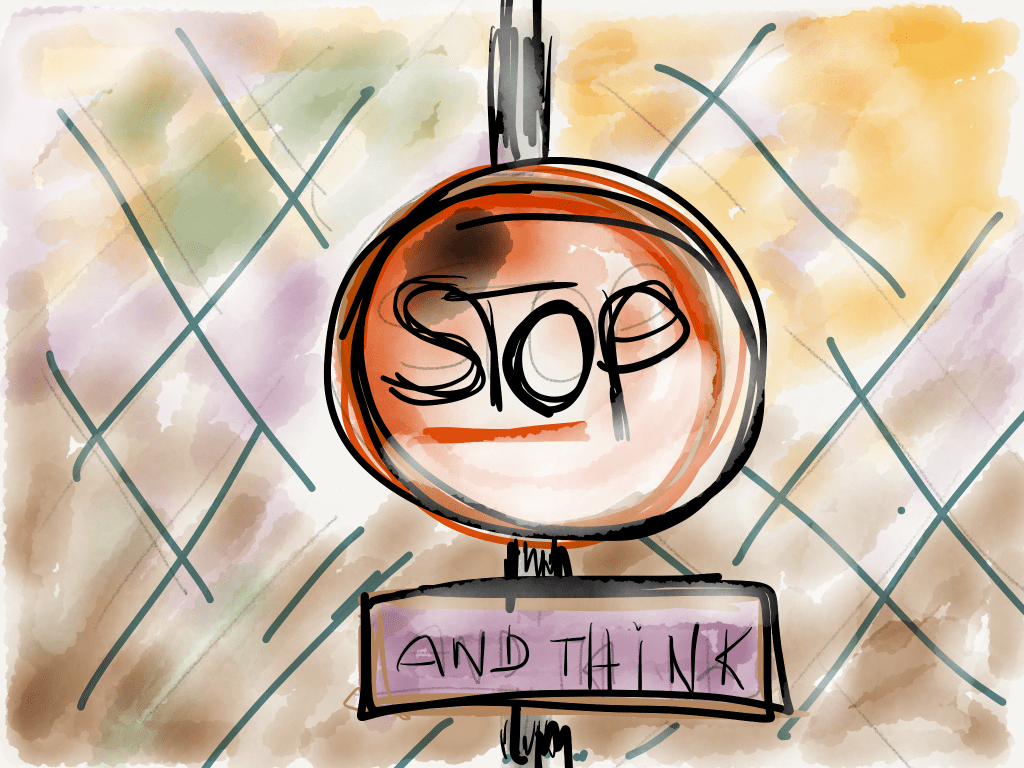
Not a long time ago I was invited to give a talk to the teachers of one school. The headmaster, a friend of mine, told me that I can speak about anything that I find important as long as it makes his teachers stop and reflect. So I made this list of 10 points that for me are crucial ingredients in the quest of making a good job of our undertaking and of managing to surf through the violent waves that sometimes hit us and to survive, with a smile. 

Josef Huber

March 2024, Gamlitz, Austria

Die Waffen nieder (Lay down your arms)

Bertha von Suttner, Nobel Peace Prize 1905

To all those who still think that wars are a necessity and need to be fought whatever the human and material cost, I recommend reading Bertha von Suttners writings, especially her book “Lay down your arms” (Die Waffen nieder, 1889).

The cost of war is not limited to the loss of material goods, the destruction of towns and infrastructure and the loss of lives, although these are definitely reasons enough not to engage in wars. The cost of wars is also the loss of perspectives for a peaceful future, for a future at all. Each violent deed creates pain and suffering and deep-seated resentments which will surface again and poison all future actions.

Your task for today and the rest of Easter is to study the following quotes by Bertha von Suttner and review your support for ongoing and future wars.  Whatever reasons you may have and bring forth to justify an engagement in war and violence, know that you are deeply wrong in doing so. Think it through because the absence of thinking things through is the underlying reason for the mess we are in. In the words of Bertha von Suttner: 

“Denken nicht,” wiederholte er. “Gott sei’s geklagt, das ist an allen Übeln schuld: die meisten denken nicht.” (“They don’t think,” he repeated. “For heaven’s sake, that is to blame for all evil: most people don’t think.”)

  1. Nationalism is a tool used by those in power to control the masses and justify their actions.
  2. The goal of true education is to create individuals who value peace and seek to resolve conflicts through dialogue and understanding.
  3. Humanity will never progress if we continue to glorify violence and warfare.
  4. War has become the industry of the world, and peace has become the dream of a few.
  5. The pursuit of peace is not a weakness, but a sign of strength and wisdom.

And if you want to listen to the book then download the free audio book “Die Waffen nieder” here.

I would like to read your thoughts on this so do not hesitate to leave a comment.

What did you learn in school today?

“… What did you learn in school today dear little boy of mine?

What did you learn in school today dear little boy of mine?

I learnt that war is not so bad, I learned about the great ones that we’ve had,

We fought in Germany and in France, and someday I might get my chance;

And that’s what I learnt in school today, that’s what I learnt in school.”

This is the last verse of the well-known song by Tom Paxton which of course is also addresses to all the girls. It was first recorded by  Pete Seeger in 1963 and it was put at the beginning of the book “Teaching as a subversive activity” by Neil Postman and Charles Weingartner (1969). 

Are we still there? Haven’t we made progress?

I guess not. It still seems an utmost necessity to radically change the education we provide for our children and young adults (and older adults too). And is it again, or still, the time to focus much more on the development of critical thinking and exploring skills than on reiterating knowledge bits? Even if these knowledge bits talk about peace and democracy. 

Despite everything we have achieved since, we still do not have thriving democracies where the rule of law is fully respected and where human rights are not only the professed values but are actually the basis of the lived experience of all of us. And, we do not have peace at all. On the contrary we are experiencing a period of increasing escalation and wars getting closer and closer.  We live in “interesting times” as the Chinese curse “May you live in interesting times” goes.

 Apparently this saying is wrongly attributed to the Chinese. It seems more likely that it originates in a speech of Joseph Chamberlain and was used and transformed by his son Austen. Quote Investigator® – Tracing QuotationsQuote Investigatorhttps://quoteinvestigator.com

The book talks about the necessity to educate young people to become crap detectors.  And I may add that we need generations of crap detectors. 

Crap detectors are needed.

Young people who are able to explore their own group critically, with an anthropological interest and stance, while of course also belonging to the group or to better to say to several groups. As we all know – or could know, at least – belonging is not a one-dimensional experience and space. We belong to many groups and sub groups and we manage these multiple belongings and critiques. This actually is what makes up our individuality and our uniqueness. Albeit, in recent years it seems that this plain truth is quickly dropped and forgotten at the behest and to the benefit of identity groups, preferably sexually, racially, ethnically or religiously defined. 

Crap detectors are needed.

To understand that the naming of a problem does not mean that we all agree on the way to solve the problem. That is actually the whole point. It is pretty easy to notice, point out and agree that “thing X or Y” poses a problem. Where people differ is the way they propose to go about solving the problem. “This boat is not built for so many people ” – right that may be a fact. But does that mean that we have to leave half of the people on the island to starve to death and save the other half with the boat.

Another example. “There is too much CO2 in the air. Let’s forbid private jets.” Sounds great, if you take CO2 footprint by person. But it will not solve the problem. It’ll only reduce CO2 by a negligible amount. If on the other hand we reduce flights in general by making them more expensive to pay for “greener” fuel, there will be a lot less CO2 in the air. 

Or if we finally start reducing the organised production of waste. Take the example of endless seasonal collections of clothes produced to be thrown away in a few months or even weeks (bought or unsold) and exported to another continent where there are mountains of unused clothes.  We also could apply a similar strategy to the production of other goods (keyword: lasting quality vs throw-away goods). We then might be able to reduce CO2 by a lot more and quicker.  And there are many more examples of the rampant stupidity and intellectual laziness that led us to the place at which we are standing now.

For all that we need crap detectors. 

We need people able and willing to think for themselves, to check their arguments for validity, to base their thinking as much as possible on verifiable facts, to be prepared to negotiate and debate, stand up for their right to explore and their right to ask for proof instead of protest as a performative undertaking.  We do not need more misguided publicity. What we need is critical thinking and doing that leads to manageable solutions that people can and will rally round. 

Invitation.

I will read the book again. I liked it alot when I read it the first time at the age of 20. I think I understood some of it, probably all, but I guess I did not understand then the depth of the gulf that separates people who honestly want to act for a better world and the ones who do not care about the world and the direction it is going as long as they can have what they (think) they need at any given moment.

Let’s read it together! “Teaching as a subversive activity” by Neil Postman and Charles Weingartner (1969) and then exchange our notes and see what we can make of it in the 20ies of the 21st century.